
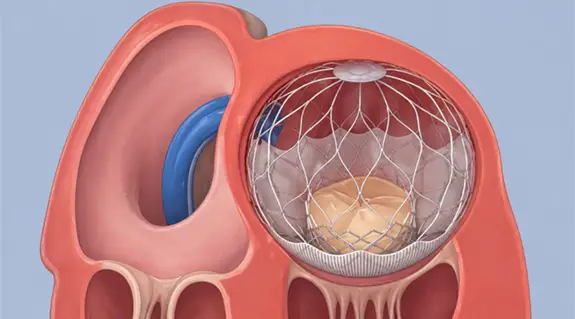
At Orange County Heart Institute, keeping our patients informed about the latest advances in cardiovascular care is something we take seriously. One of the more significant developments in structural heart disease right now is the ATLAS trial, a pivotal clinical study evaluating a new device for patients with mitral regurgitation who have exhausted conventional treatment options.
What Is the ATLAS Trial?
ATLAS stands for A Transseptal Left Atrial System for Treatment of Mitral Regurgitation. Sponsored by 4C Medical Technologies, the trial is evaluating the company’s AltaValve system, a next-generation transcatheter mitral valve replacement (TMVR) device, at sites across the United States and Europe.
The trial is focused on patients with moderate-to-severe or severe mitral regurgitation (MR) who are not suitable candidates for open-heart surgery or transcatheter edge-to-edge repair (TEER). For many of these patients, meaningful treatment options simply have not existed.
What Makes AltaValve Different?
Unlike other TMVR technologies, the AltaValve uses an atrial-only fixation approach. Rather than anchoring below the mitral valve in the left ventricle, it anchors above the valve in the left atrium. This design preserves the native mitral valve and left ventricle and avoids some of the most serious complications associated with conventional transcatheter mitral replacement, including the risk of left ventricular outflow tract obstruction.
The AltaValve system has received dual Breakthrough Device designations from the FDA, covering both standard mitral regurgitation and cases involving mitral annular calcification (MAC), one of the most difficult structural heart conditions to treat.
Why This Matters for Patients
Mitral regurgitation is among the most common valvular heart conditions. Left untreated, it can lead to progressive heart failure and, in serious cases, death. The ATLAS trial creates a potential treatment path for a significant group of patients who currently have no good surgical or minimally invasive option. The trial plans to enroll 450 patients and will run for seven years, with results intended to support FDA approval and CE marking in Europe.
OCHI’s Commitment to Structural Heart Care
Dr. Brian Kolski, OCHI’s interventional cardiologist, directs the structural heart program at the Stanley W. Ekstrom Valve Center at Providence St. Joseph Hospital, Orange County’s highest-volume catheter-based heart valve program. Dr. Kolski helped launch the transcatheter valve program at St. Joseph and participates in every case performed there, completing over 200 structural heart interventions each year. Our team closely follows emerging trials like ATLAS, and we encourage any patient who has been told they are not a candidate for mitral valve surgery or repair to speak with us about their options.
Learn more about the ATLAS trial: 4C Medical ATLAS Trial Announcement